Reactive Oxygen Species (ROS) are often described as harmful “free radicals.” While excessive ROS can damage cells, they are not inherently bad. In fact, they are essential signalling molecules required for immune defence, cellular communication, and tissue repair.
The problem begins when ROS production overwhelms the body’s antioxidant defence system — a condition known as oxidative stress.
Today, mounting evidence suggests that chronic oxidative stress and persistent low-grade inflammation are central drivers of modern chronic diseases, including obesity, cardiovascular disease, neurodegeneration, and cancer.
Why ROS Matter
At physiological levels, ROS:
However, when ROS accumulate excessively due to poor diet, sleep deprivation, environmental toxins, metabolic dysfunction, or chronic stress, they can:
This persistent inflammatory state becomes the foundation upon which many chronic diseases develop.
Chronic Inflammation: The Real Culprit
While ROS initiate oxidative stress, chronic inflammation sustains disease progression.
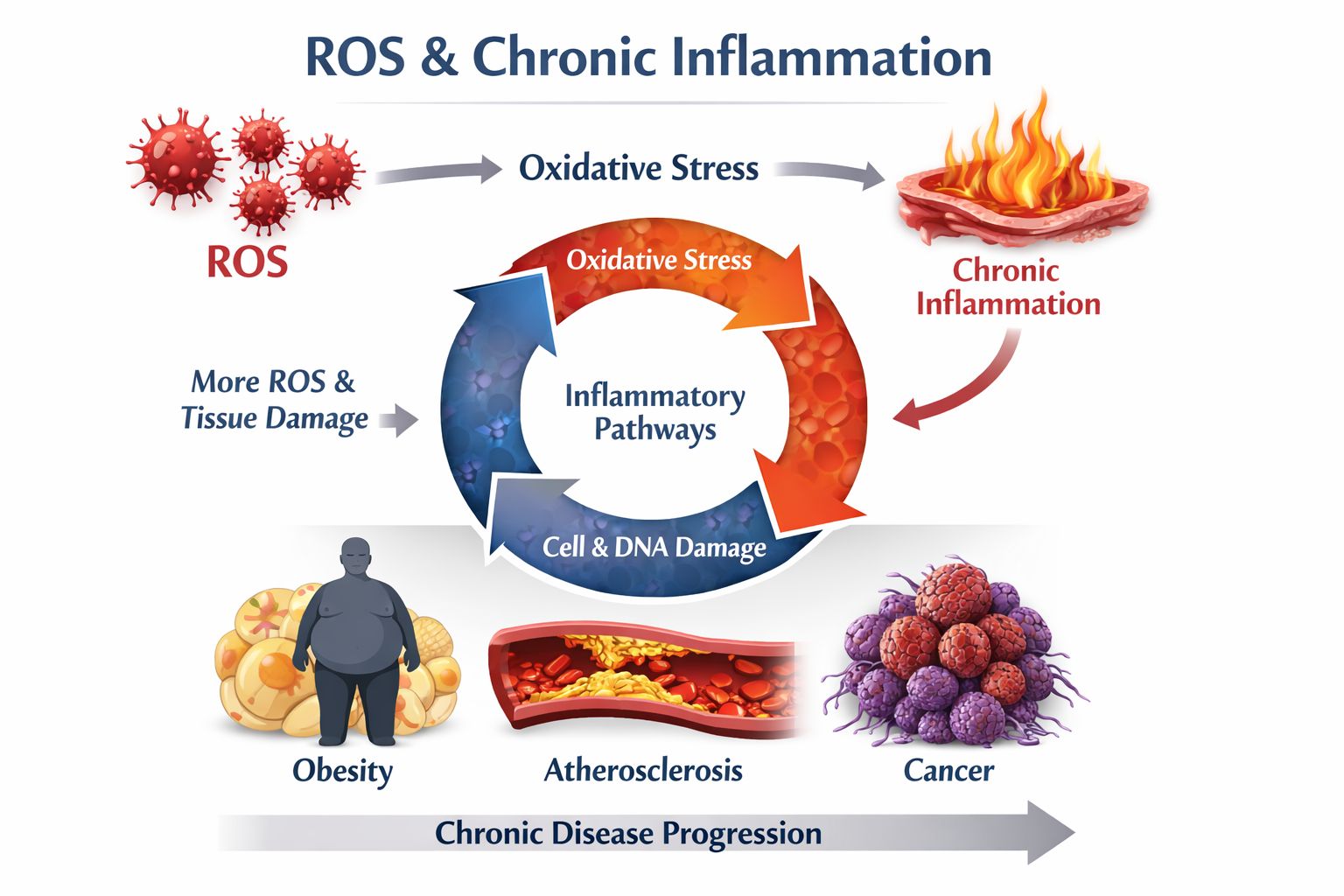
Excess ROS activate inflammatory pathways such as NF-κB and cytokine cascades, creating a self-perpetuating cycle:
Oxidative stress → Inflammation → More ROS → Tissue damage
Over time, this cycle contributes to:
In oncology research, oxidative stress is recognized as a key factor in DNA mutation and tumor progression, although cancer cells also exploit ROS for growth signaling.
TCM Interpretation: Phases of Inflammation
Within Traditional Chinese Medicine (TCM), the biological state characterized by persistent oxidative and inflammatory burden shows meaningful functional parallels with several classical pathomechanisms.
Common herbal strategies that demonstrate antioxidative and anti-inflammatory effects include:
Modern pharmacological studies increasingly validate their roles in redox balance and inflammatory modulation.
Practical Health Strategies
Because ROS are both necessary and potentially harmful, the goal is balance, not elimination.
Evidence-supported lifestyle measures include:
It is worth mentioning that over-supplementation with high-dose synthetic antioxidants is not universally beneficial and may even blunt physiological signaling.
References