

Traditional Chinese Medicine
Traditional Chinese Medicine
Traditional Chinese Medicine (TCM) takes a holistic approach, focusing on restoring harmony between yin and yang for overall well-being. At Real Health, our licensed and bilingual TCM physicians create personalised treatment plans tailored to each individual’s body constitution and health needs.
TREATMENT AREAS
Our physicians provide care across a wide range of health concerns, integrating Traditional Chinese Medicine (TCM) principles with modern understanding of disease management.
*For other medical conditions that are not listed below, please consult our physicians to find out more.
Pain Conditions
- Sports Injuries
- Arthritis and Spondylosis
- Neuropathic Pain
- Post-operative Pain
Metabolic Disorders
- Hyper-/Hypothyroidism
- Diabetes
- Hypertension
- Obesity
Neurological Disorders
- Headache and Migraine
- Post Stroke Hemiplegia
- Parkinson's Disease
- Neuropathy
Gastrointestinal Disorders
- Indigestion
- Acid Reflux
- Irritable Bowel Syndrome
- Chronic Constipation
Gastrointestinal Disorders
- Indigestion
- Acid Reflux
- Irritable Bowel Syndrome
- Chronic Constipation
Men's & Women's Health
- Men: Erectile Dysfunction, Prostate Enlargement, Infertility
- Women: Menstrual Disorders, Infertility, Menopausal Symptoms
Oncology (Cancer)
- Cancer-related Fatigue, Low Immunity, Pain, Neuropathy
- Post-therapy Nausea and Vomiting, Hair Loss
Sub-health Disorders
- Beauty-related Freckles, Wrinkles, Acne, etc
- Stress and Anxiety
- Chronic Fatigue
- Insomnia
Sub-health Disorders
- Beauty-related Freckles, Wrinkles, Acne, etc
- Stress and Anxiety
- Chronic Fatigue
- Insomnia
TCM Consultation & Diagnostics
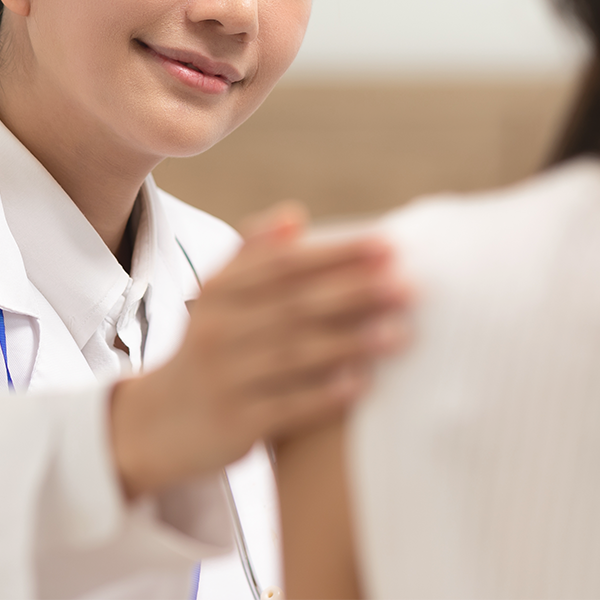
Before starting any treatment, your consultation begins with the four classical TCM diagnostics. Together, they provide a complete picture of your body’s constitution and health condition.
望
1. Inspection
Observe and detect any abnormalities of the patient’s complexion, tongue, physical structure and alignment, body movements, gait, etc.
闻
2. Olfaction & auscultation
Smell and hear, and detect any abnormalities of the patient’s speech pattern, breath, body odour, etc.

问
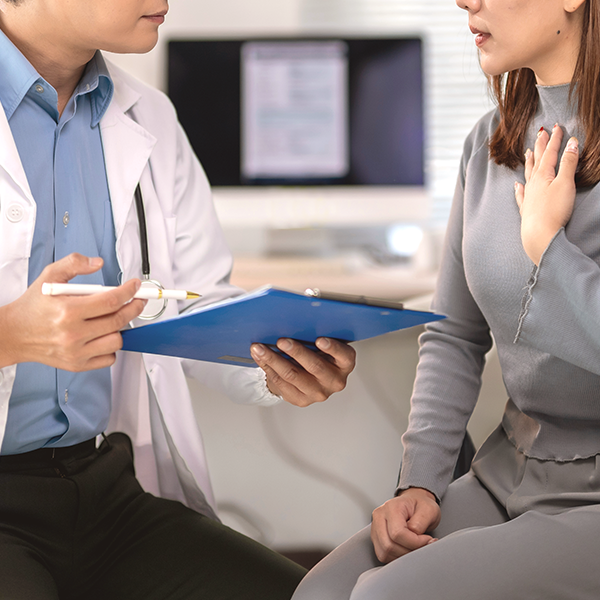
3. Inquiry
Ask the patient’s main complaints and concerns, medical history, daily routines, and any emotional or lifestyle factors affecting their well-being.
切
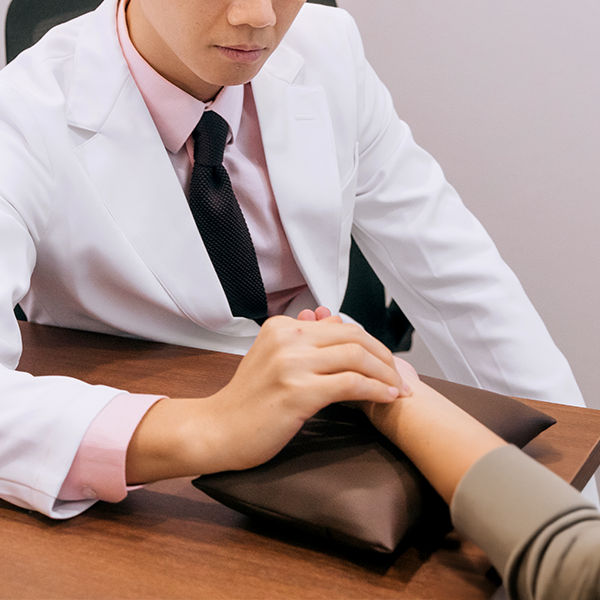
4. Palpation
Palpate and detect any abnormalities of the patient’s pulse and other body parts.
Together, these four methods, along with a review of relevant Western medical reports, provide a holistic understanding of your health, allowing the physician to create a treatment plan tailored to you.
Treatment Types
A typical TCM treatment plan may comprise a single or a combination of two or more treatment modalities. The six different TCM treatment modalities: TCM Herbal Medication, Acupuncture, Electroacupuncture, TCM Tuina, Cupping and Scraping.
TCM Herbal Medication
- Taking TCM herbal medications has never been so fuss-free.
- Thanks to modern technology, TCM herbal medication now comes in the convenient form of water-soluble finely powdered extracts. Other forms of medication like pills, tablets and capsules may also be prescribed for our patients.
- As our TCM herbal medications are all derived from natural products, they are generally safe to consume. Based on the diagnosis after assessing the patient's unique body constitution and medical condition, the TCM physician will determine the patient's suitability for TCM herbal medication.
Acupuncture
- Acupuncture is a non-surgical procedure that involves the skilful insertion of fine and sterile needles at specific acupuncture points of the body. These acupoints are usually located along meridian channels that distribute qi (vital energy) and blood throughout the body.
- It is common to experience various sensations during acupuncture like dull ache, tingling, etc. Known as "deqi" in TCM, these sensations signify the triggering of the body's natural healing response to eradicate disease-causing agents, clear blockages of meridian channels to promote a smoother qi and blood circulation within the body.
- From a modern scientific perspective, acupuncture's therapeutic mechanism is multi-faceted - it modulates the body's inflammatory response, promotes blood and fluid perfusion, stimulates repair and regeneration through the nervous system, etc.
- The World Health Organisation (WHO) has recognised the clinical efficacy of acupuncture to effectively treat a wide range of common ailments i.e., acute and chronic pain conditions,effectively neurological disorders, digestive disorders, gynaecological disorders, respiratory disorders, cardiovascular disorders, dermatological disorders, etc.
Electroacupuncture
- Electroacupuncture is the application of electrical stimulation, continuously over a short period at a consistent intensity and frequency, to the acupuncture needles inserted onto the acupoints. It is a common adjunct to enhance the therapeutic effects of acupuncture.
- The electrical stimulatory pulses are adjusted gradually to acclimatize the patient and set to a level of intensity comfortable for the patient. Usually, the duration of the electrical stimulation can range from 10 to 30 minutes, up to the physician's discretion.
- The patient may experience slight twitching of the muscles, dull ache or tingling at the site of electrical stimulation. No pain should be felt.
TCM Tuina
- TCM Manual Therapy (Tuina) is a physical treatment that involves the skilful usage of the physician's fingers, hands, forearms and elbows, and sometimes massage tools, to perform different manual techniques. It is effective in readjusting the sinews and joints, unblocking the meridian channels by expelling disease-causing agents, restoring and enhancing qi and blood circulation in the body.
Cupping
- Cupping is the application of a glass cup with a firm suction force onto the skin. According to TCM theory, this draws disease-causing toxins away from the meridians and organs towards the surface of the skin for expulsion through rupturing the capillaries. This explains the dark-purplish marks seen on the body of those who have undergone cupping.
Scraping
- Scraping (Guasha) is a TCM therapy that involves using a blunt and smooth-edged tool to lightly scrape the skin. According to TCM theory, this ruptures the capillaries, facilitating the removal and release of disease-causing toxins from the meridians through the skin. Hence, purplish-red marks can be seen on the body of those who have undergone scraping.