To further safeguard your structural integrity and reinforce the principles of The Geometry of the Hip Hinge and Nose to toes pivot, I have curated a three-step hip mobility routine. By restoring your hips' natural ability to rotate and hinge, you reduce the compensatory stress on your lumbar spine during daily lifting and carrying.
Based on the biomechanical standards for proper form during mobility, here is your step-by-step exercise guide.
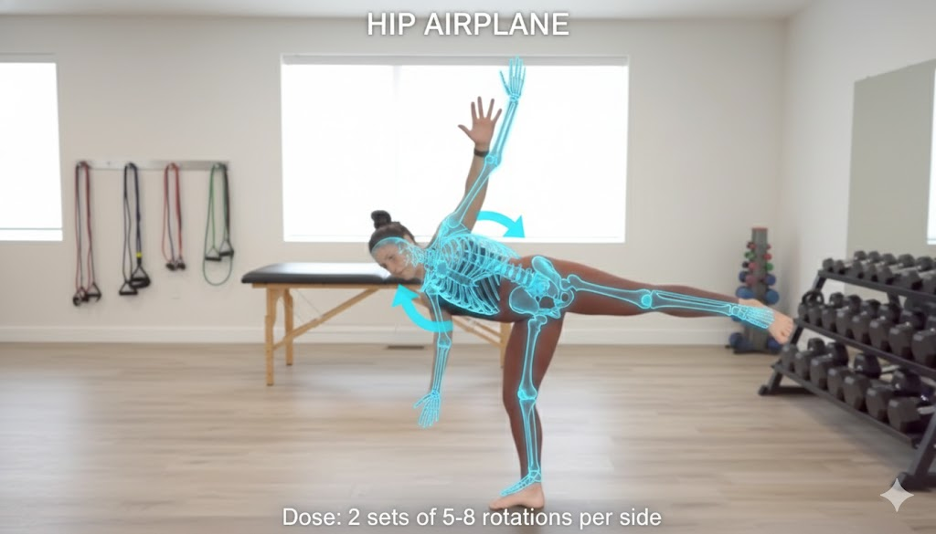
1. Hip Airplanes
Focus: Rotational mobility and stability of the Lumbar spine and hips.
- The Position: Stand on one leg with a slight bend in the knee. Hinge forward at the hips, extending your opposite leg straight back to create a "T-shape" with your body.
- The Movement: While keeping your standing leg stable, rotate your hips "open" toward the ceiling, then rotate them "closed" toward the floor.
- David’s Tip: If your balance is challenged, hold onto a sturdy object like a wall or chair. This exercise "reminds" the hip joint of its rotational capacity, preventing the lower back from taking on that stress.
- Dose: 2 sets of 5–8 rotations per side.
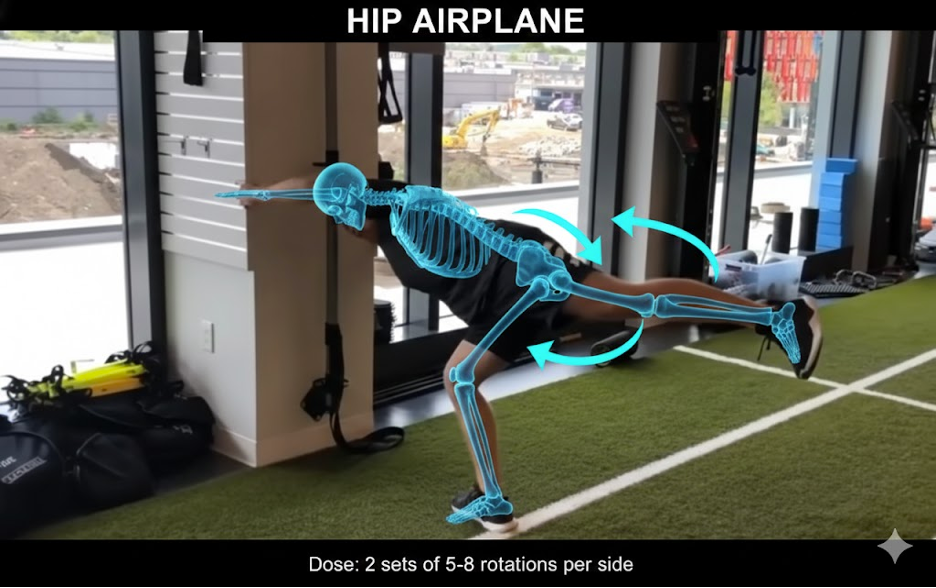
Modified version using a wall as support*
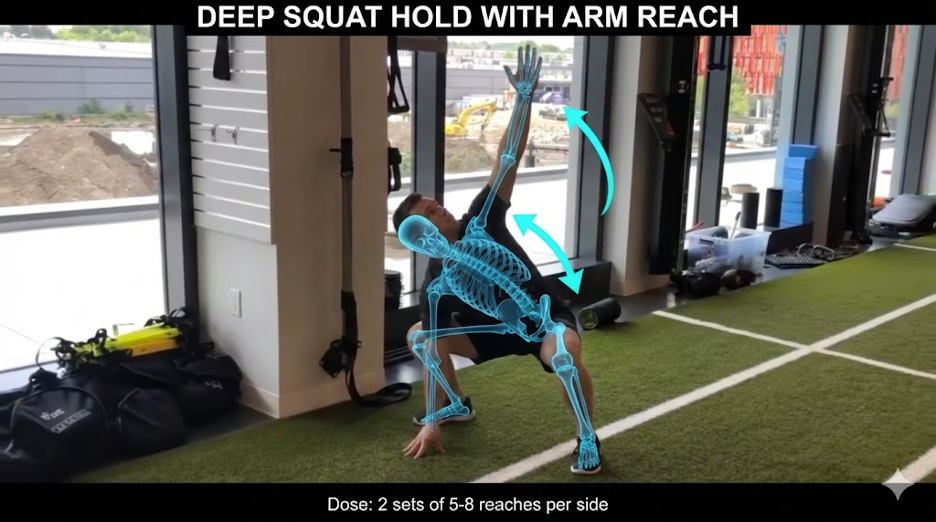
2. Deep Squat Hold with Arm Reach
Focus: Thoracic rotation and restoring the of intra-abdominal pressure.
- The Position: Lower yourself into a deep squat with your feet shoulder-width apart and heels flat on the ground. Keep your chest as upright as possible.
- The Movement: Place one hand on the floor for support. Reach your other arm toward the ceiling, rotating your upper back and following your hand with your eyes.
- David’s Tip: If you cannot keep your heels down, place a small plate or folded towel under them. This targets the hips, ankles, and thoracic spine simultaneously.
- Dose: 2 sets of 5 reaches per side while holding the squat.
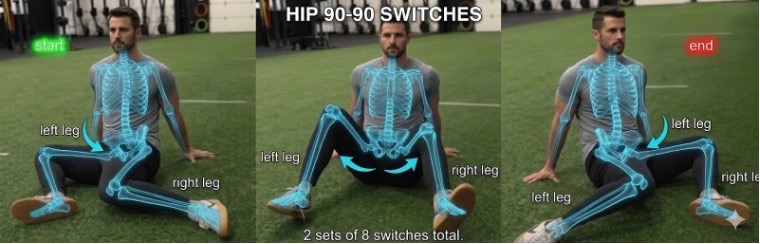
3. Hip 90-90 Switches
Focus: Internal and external hip rotation to maintain Tensegrity.
- The Position: Sit on the floor with one leg in front and one behind, both bent at 90-degree angles.
- The Movement: Lift your knees slightly and rotate both legs to the opposite side, ending in a mirrored 90-90 position. Keep your torso facing forward as your legs move beneath you.
- David’s Tip: Try to perform the switches without using your hands for support to build active control in the hip muscles. This restores the internal and external rotation often lost to modern sitting habits.
- Dose: 2 sets of 8 switches total.
Consistent practice of these movements—at least four to five times per week—will yield noticeable results within a few weeks, making your "nose-to-toes" pivots feel like second nature.
References